


Author : Sr Yap Kian Ann,
registered valuer & property consultants
October 2, 2026
What is the Comparison Method of Valuation?
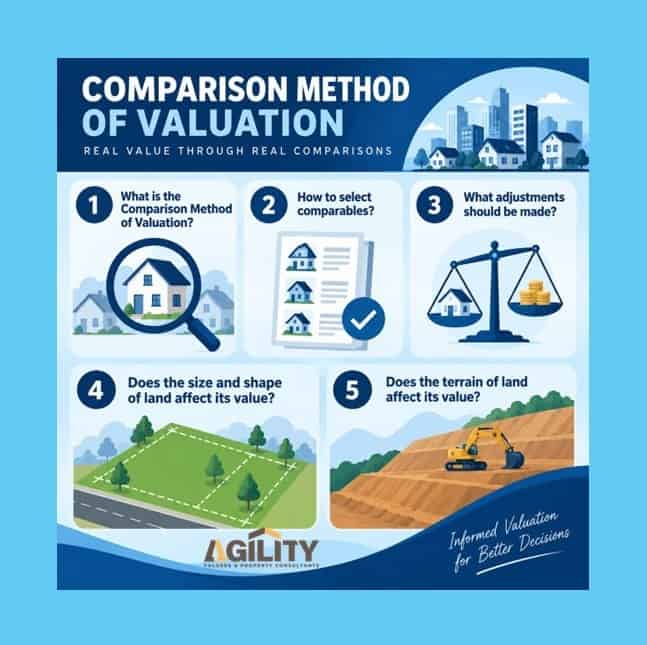
The Comparison Method of Valuation, also known as the Comparison Approach or Direct Comparison Method, is one of the valuation approaches provided for under the Malaysian Valuation Standards (MVS 7). It is one of the most widely used approaches to property valuation and is applicable to almost all types of property, particularly where there is sufficient evidence of recent transactions involving properties that are similar to the subject property.
The method is based on the principle that a prudent purchaser would not normally pay more for a property than the cost of acquiring a similar property with comparable characteristics and utility. Therefore, the value of the subject property is indicated by analysing the prices paid for comparable properties in the open market.
In applying this method, the valuer first identifies recently transacted properties that are considered comparable to the subject property. Where appropriate, properties currently being offered for sale may also be considered as supplementary market evidence. However, asking prices should generally be treated with caution, as they represent the expectations of sellers rather than prices actually achieved in completed transactions.
How to Select Comparables?
Under the Comparison Method of Valuation, valuers will normally select several suitable comparables for analysis and then identify one or two of the most appropriate comparables for value adoption.
Based on the principle of comparing “an apple with another apple”, comparables should generally be of the same property type. For example, it may not be appropriate to compare a double-storey terrace house with a single-storey terrace house, agricultural land with residential land unless the agricultural land is zoned or permitted for residential use, or a conventional shop lot with a retail lot located within a shopping mall.
The comparable properties are then systematically compared with the subject property. Adjustments are made where there are differences between the comparables and the subject property. These adjustments may relate to differences in location, size, age, condition, tenure, transaction date, accessibility, building specifications, development potential and other relevant characteristics.
For example, if a comparable property is located in a superior location to the subject property, its sale price may need to be adjusted downward to reflect the inferior location of the subject property. Conversely, if the comparable property is inferior in terms of location or condition, an upward adjustment may be appropriate.
The objective is not to mechanically adjust every difference, but rather to determine the relative contribution of each material difference to market value. The valuer exercises professional judgement in deciding whether an adjustment is necessary.
After analysing and adjusting the comparable evidence, the valuer establishes an indicated unit rate to be applied to the subject property. Greater weight is generally given to comparables that are more recent, more similar and more directly comparable to the subject property. The final valuation is then derived by applying the adopted rate to the subject property.
What Adjustments Should Be Made?
Location is one of the most important factors affecting property value. Consideration should be given to the proximity of the comparable to the subject property, neighbourhood characteristics, accessibility and surrounding development.
The best comparables are generally those located within the same development, such as properties within the same condominium development or houses within the same Taman.
The land area or built-up area of the comparable should generally fall within a similar range to that of the subject property.
For example, it may not be appropriate to directly compare a 10,000 sq ft land parcel with a 5-acre land parcel. However, where suitable comparables are scarce, the valuer may have no choice but to use properties of different sizes. In such circumstances, an appropriate size adjustment should be considered.
Generally, a smaller plot may achieve a higher unit rate on a per-square-foot basis. However, this is not always the case, as the size of the land should also be considered in relation to the minimum or optimum size required for a particular type of development.
For example, a half-acre parcel may command a higher unit rate because it is more affordable to individual purchasers. However, it may not be suitable for a condominium development. In this context, a 2-acre parcel may be more sought after than a half-acre parcel because it may provide a more suitable scale for development.
Sometimes, the size adjustment can also be considered together with the frontage width.
For example, consider two adjoining parcels of land, one measuring 1 acre and the other 5 acres. Both parcels front onto a main road, and the 5-acre parcel has five times the frontage width of the 1-acre parcel. In theory, the 5-acre parcel could potentially be subdivided into five 1-acre plots, subject to planning requirements, subdivision costs and other relevant considerations.
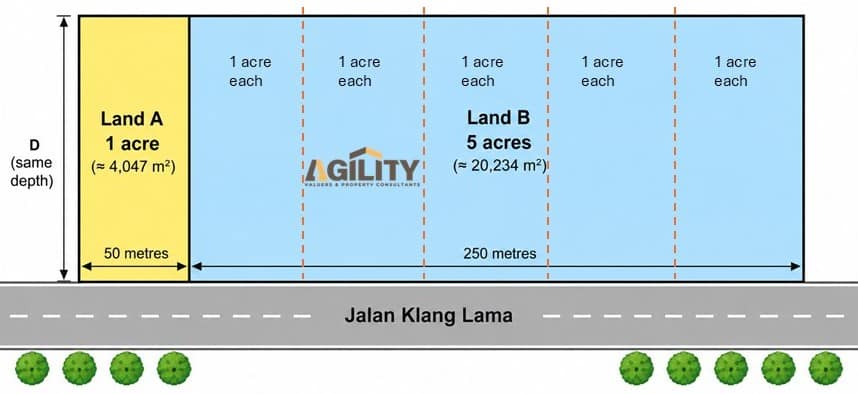
Therefore, although a size adjustment may still be appropriate, the quantum of the adjustment may not be as significant as one might initially assume. The valuer should consider the actual characteristics and development potential of the respective parcels rather than applying a mechanical adjustment solely based on land size.
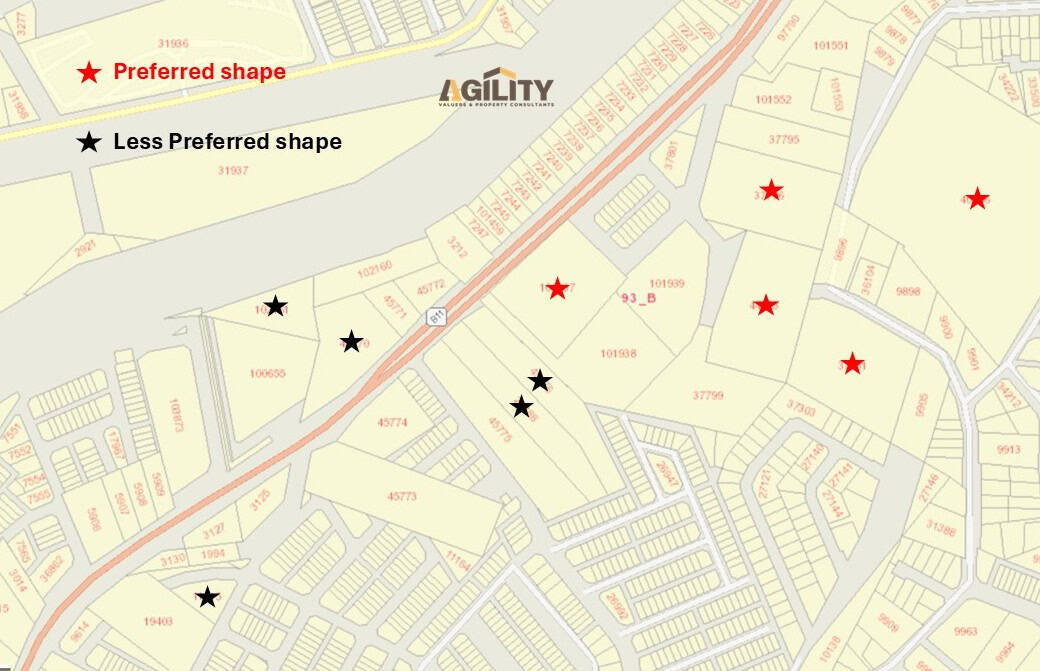
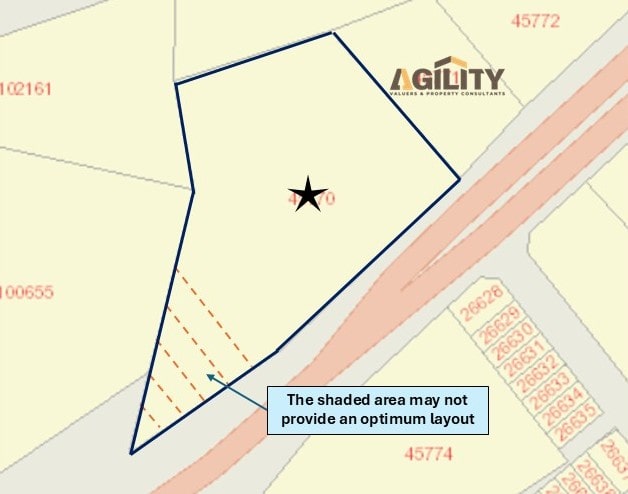
Plot shape is a crucial factor, particularly for development land, as an irregularly shaped parcel may affect the layout arrangement and the efficiency of development.
An inefficient plot shape may make it more difficult to maximise the number of developable units and may therefore affect the achievable gross development value (GDV) and development profit.
For example, a long and narrow parcel with a very wide frontage but limited depth may not provide an optimum development layout. Conversely, a more regular and efficient plot shape may allow for better site planning and more efficient utilisation of the land.
There are many developments comprising both freehold and leasehold properties. Where there is a scarcity of recorded transactions involving properties with the same tenure as the subject property, valuers may have no choice but to consider transactions involving properties with different tenure. Example scheme:
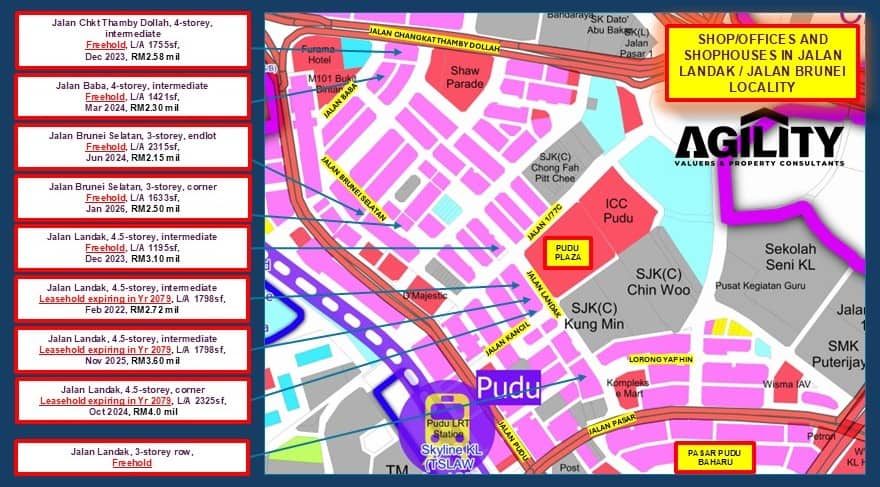
In such circumstances, an appropriate adjustment for tenure may be necessary.
To understand more about the difference between freehold and leasehold property values, you may refer to our earlier insight on this topic. https://www.agilitymy.com/insight-en/should-i-buy-a-leasehold-property-or-opt-for-freehold/
For landed properties, market value generally comprises both the land value and the value of the building.
The building value depends on factors such as the quality of finishes and materials used, the age of the building, its design, level of maintenance and overall condition.
Where there are differences between the comparable and the subject property, the valuer may need to consider appropriate adjustments to reflect differences in building quality, age, condition and specifications.
For stratified residential units, factors such as floor level, orientation, frontage and views can have a significant impact on value.
Units located on higher floors and enjoying unobstructed views may be more sought after by purchasers. Orientation and views may also influence value. For example, a unit with an attractive view towards a prominent landmark such as the KLCC development may command a premium due to stronger buyer demand.
A precise valuation should take these relevant factors into consideration when determining the appropriate value.
Besides location, property value is significantly influenced by accessibility and road frontage.
This is particularly important for commercial properties such as shop lots, where visibility and ease of access can directly affect the ability of a business to attract customers.
A property with better accessibility, greater visibility or a more prominent road frontage may therefore command a premium over an otherwise similar property with inferior accessibility or frontage.
For development land or under-utilised properties with potential for a higher and better use, the permissible land use and development density or plot ratio are important determinants of land value.
This is because the value of development land is often derived from its residual development value. Generally, the greater the permissible development potential, the higher the potential residual land value, subject to development costs, market demand and other relevant considerations.
Agility Valuers & Property Consultants Sdn. Bhd. has shared this topic in our earlier insight on town planning and valuation. https://www.agilitymy.com/insight-en/town-planning-and-valuation/
For investment properties, committed tenancy, rental level, tenant quality and occupancy are among the factors that may influence market value.
A property with a strong and sustainable tenancy, good-quality tenant and high occupancy level may be more attractive to investors and could command a premium over a similar property with weaker tenancy or lower occupancy.
To understand more about how tenancy can affect property value, you may refer to our earlier insight on this topic. https://www.agilitymy.com/insight-en/does-tenancy-affect-property-value/
Property market conditions may change over time and, in some circumstances, even within a few months, particularly during periods of rapid market growth or downturn.
Where there are no suitable comparable transactions that occurred under the same market conditions as at the valuation date, earlier or later transactions may be considered, with an appropriate time lapse adjustment where necessary.
The valuer should consider the prevailing market conditions between the transaction date and the valuation date when assessing the relevance of the comparable evidence.
Particularly for landed residential properties, properties located near negative external factors may command lower values.
Examples include properties located near an oxidation pond, electrical substation, facing a T-junction, or located close to high-voltage transmission lines.
Conversely, properties benefiting from positive external factors, such as those facing a playground or golf course, or those located in a quieter and more desirable area, may command a premium.
The extent of any adjustment should depend on the market’s perception of the particular positive or negative factor.
The terrain and level of the land can have a significant impact on its development potential and value.
Land with undulating or steep terrain may incur higher costs for earthworks, including the cutting, filling, grading and compaction of soil, in order to achieve the appropriate levels and ground conditions for the construction of buildings, roads, drains and other infrastructure.
Therefore, subject to other factors being equal, land with relatively flat and level terrain may generally be more desirable and could command a higher value than land requiring substantial earthworks.
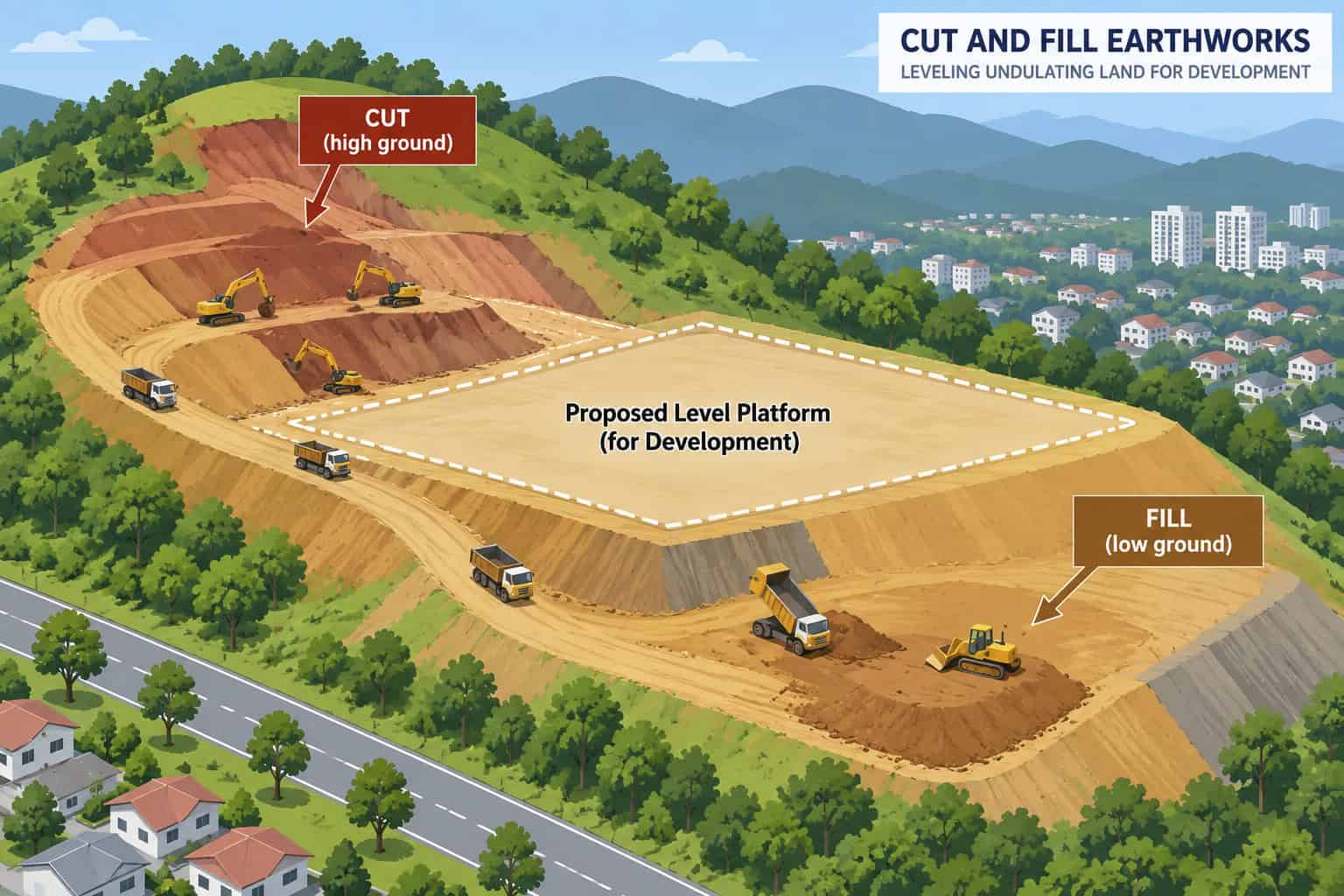
The level of the site relative to the frontage road should also be considered.
For example, a landed residential property that is significantly below the level of the frontage road may be less preferred by purchasers due to factors such as drainage, accessibility, potential flooding concerns and the need for additional site works.
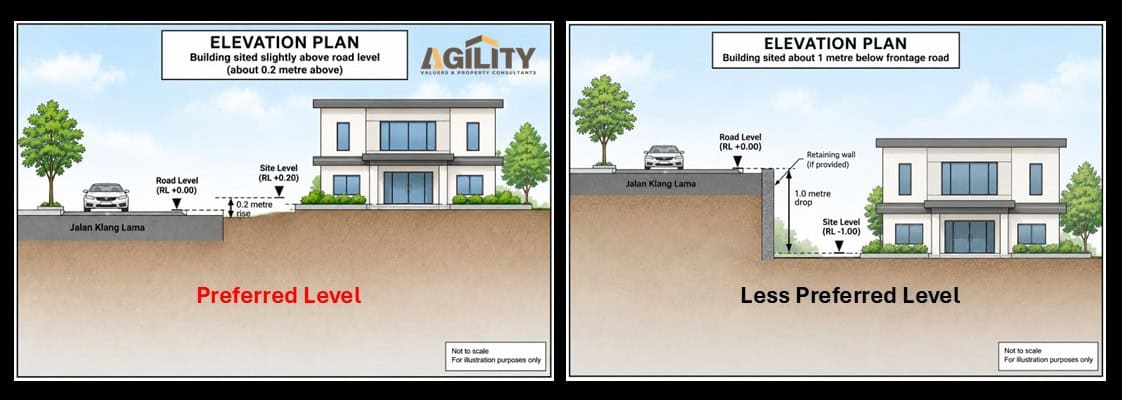
Conversely, a property sited slightly above the frontage road level may be viewed more favourably, particularly where the difference in level provides better drainage and accessibility without requiring excessive earthworks.
Conclusion
The Comparison Method of Valuation may appear straightforward, but arriving at a reliable value requires more than simply comparing the prices of nearby properties.
A competent valuer needs to understand the characteristics of the subject property, identify the most appropriate comparables, analyse the differences and exercise professional judgement in making appropriate adjustments.
Ultimately, the quality of the valuation depends significantly on the quality and relevance of the comparable evidence and the valuer’s ability to interpret the market behaviour reflected in those transactions.
Feel free to reach out to Agility Valuers & Property Consultants Sdn. Bhd. for a detailed discussion about your property.
Frequently Asked Questions
The Comparison Method, also known as the Direct Comparison Method, determines property value by analysing prices paid for similar properties recently sold in the open market.
Valuers look for recently transacted properties that are similar to the subject property in terms of property type, location, size and other relevant characteristics.
No two properties are exactly the same. Adjustments may be made for differences such as location, size, tenure, condition, accessibility, development potential and transaction date.
Yes. Plot size and shape can affect development efficiency, layout and development potential. A larger plot does not necessarily mean a higher unit value.
Yes. Undulating or steep land may require additional costs for cutting, filling, grading and compaction. Therefore, relatively flat land may generally be more desirable than land requiring substantial earthworks, all other factors being equal.
———————————————————————————————————————————————————————
This blog / insight is based on Agility Valuers & Property Consultants / Agility Research (AVPC)’s current understanding and insights about the related topic in the current property / real estate market context. Agility Valuers & Property Consultants / Agility Research (AVPC) makes no guarantees, representation or warranties of any kind, expressed or implied, regarding the information including but not limited to, warranties of content, accuracy and reliability. Interested parties should undertake their own inquiries as to the accuracy of the information. Agility Valuers & Property Consultants Sdn. Bhd. / Agility Research (AVPC) excludes unequivocally all inferred or implied terms, conditions and warranties arising out of this document and excludes all liability for loss or damages arising therefrom.
Neither the whole nor any part of our blog or insights may be included in any published document, circular, prospectus or statement, nor published in any way without the prior written approval of Agility Valuers & Property Consultants Sdn. Bhd. / Agility Research (AVPC). We shall not be obligated to update this blog / insight in response to changes in market conditions or the regulatory environment subsequently.
For more information, please contact:
Sr Yap Kian Ann
Tel: 603-9544 2694 Email: yap@agilitymy.com
HP : 6012-378 5811 Website: www.agilitymy.com
All Rights Reserved
Copyright © 2026 Agility Research
